Notebook
My annual July sabbatical
Every July I down tools for the month. Three sabbaticals in, I'm learning what rest actually is, and it isn't what I assumed.

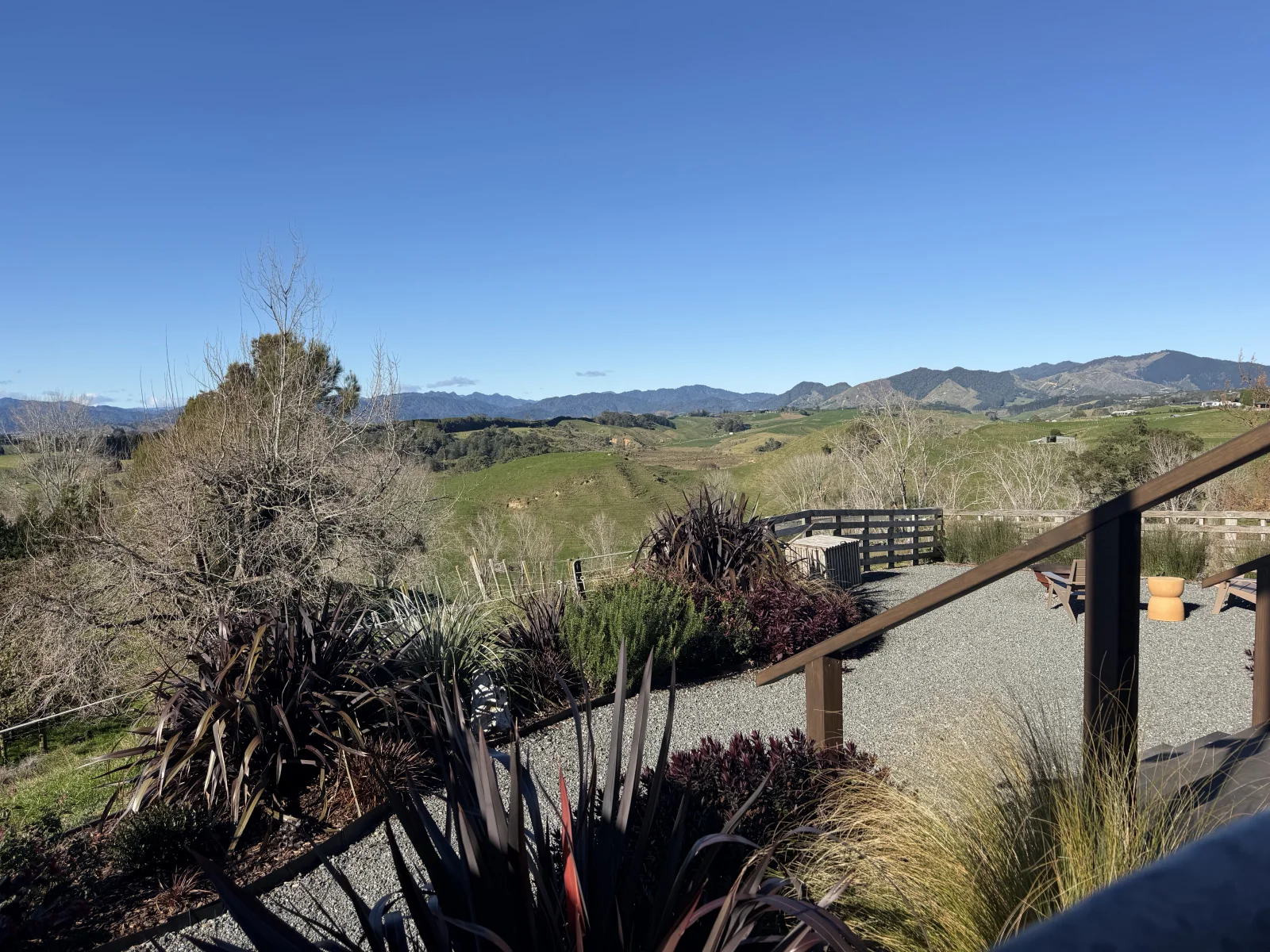
Every July I down tools for the month. This year was the third time, which I think officially makes it a tradition, so it feels like the right moment to write about what it is, where it came from, and what I'm learning from it. Mostly what I'm learning is about myself, and not all of it is flattering.
Where it came from
The sabbatical wasn't my idea. The team at Wild at Heart take July off every year as a sabbatical month, and since the majority of my work is with them, my inbox goes quiet whether I like it or not. It made sense to stop fighting that and take advantage of it. If your biggest client closes for a month, you can either scratch around for filler work or you can accept the gift.
The first one was July 2024, which coincided almost exactly with our move to New Zealand. I had plenty to keep my mind occupied, which is a polite way of saying it wasn't a sabbatical at all. It was a house move across the planet that happened to overlap with a month off, and it bled into two weeks of August anyway.
2025 was the first proper one, and the highlight was a trip to Denver for Laracon that quietly turned into a mini vacation. I met up with friends, played golf, and saw Tedeschi Trucks Band at Red Rocks Amphitheatre, which is the kind of venue that makes any band sound ten percent better than they are. Outside of that week, though, the month mostly passed me by. I had no plan, so the days just happened around me. I finished July rested-ish but with no real sense that I'd done anything deliberately. That bothered me more than I expected.
This year I had a plan
For 2026 I decided the fix was structure, so I wrote an actual plan and published it to hold myself to it. The idea was that rest is the deliverable, not a side effect. Five loose phases across the month, starting with a few days off-grid to decompress, then building up two small projects: learning guitar fundamentals with JustinGuitar, and a reading list of roughly a book a week. Alister McGrath's biography of C.S. Lewis, The Great Divorce, John Lennox's 2084, and Disciplines of a Godly Man.
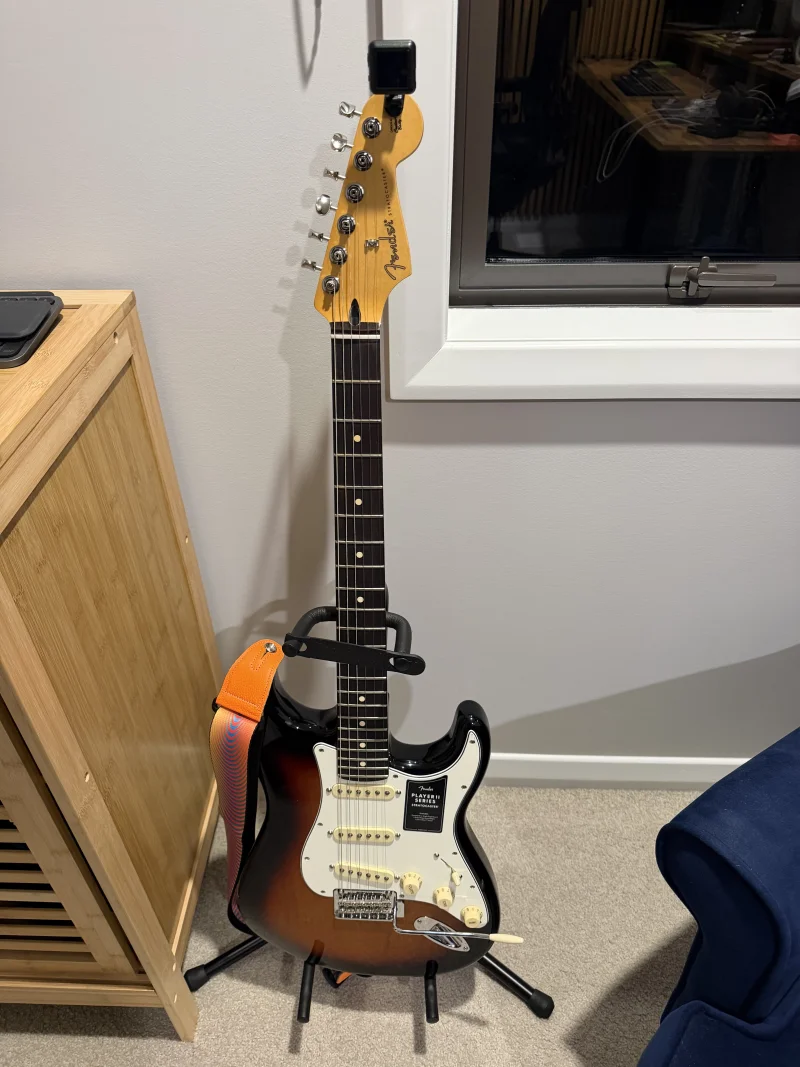
The guitar is an entirely new instrument for me, and the Stratocaster was a new purchase for the occasion. I was a drummer, but I gave up my kit when we moved to New Zealand. I hadn't fallen out with playing, but without a band, a drum kit becomes a bit of an antisocial instrument. It was good for frustration, for the days I was stuck on a problem I couldn't work through, and not much else. So I bought a Strat and started from zero.
The daily shape was simple. No alarms, slow mornings without screens, twenty minutes of guitar, an hour of reading, open afternoons. One of the design principles was to bin anything that started causing stress, which turned out to be prophetic.
What actually happened
Sickness took the first two weeks. That flattened the decompress phase and most of the build phase before they started.
The off-grid trip technically happened. I'd rented a self-contained cabin through Canopy Camping in an orchard just outside Opotiki, a ninety minute drive down the coast. In winter, with no leaves on the trees, you can see straight through to the Pacific. It's a genuinely lovely spot and I lasted one night.
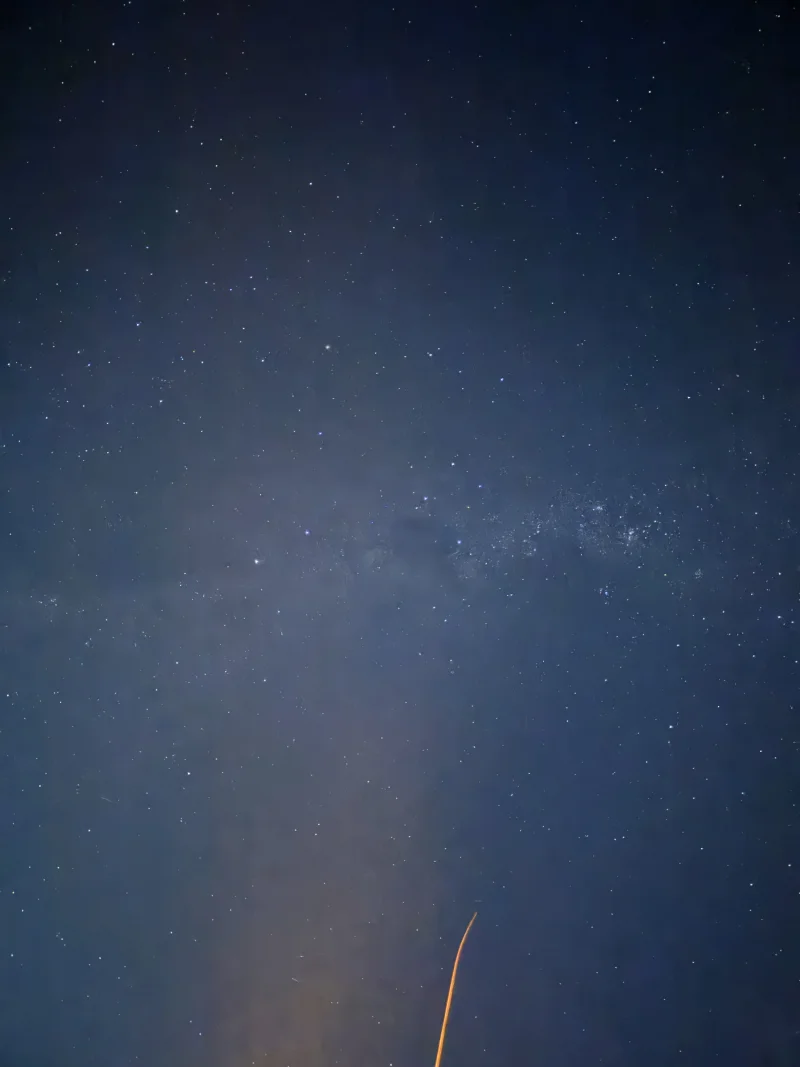
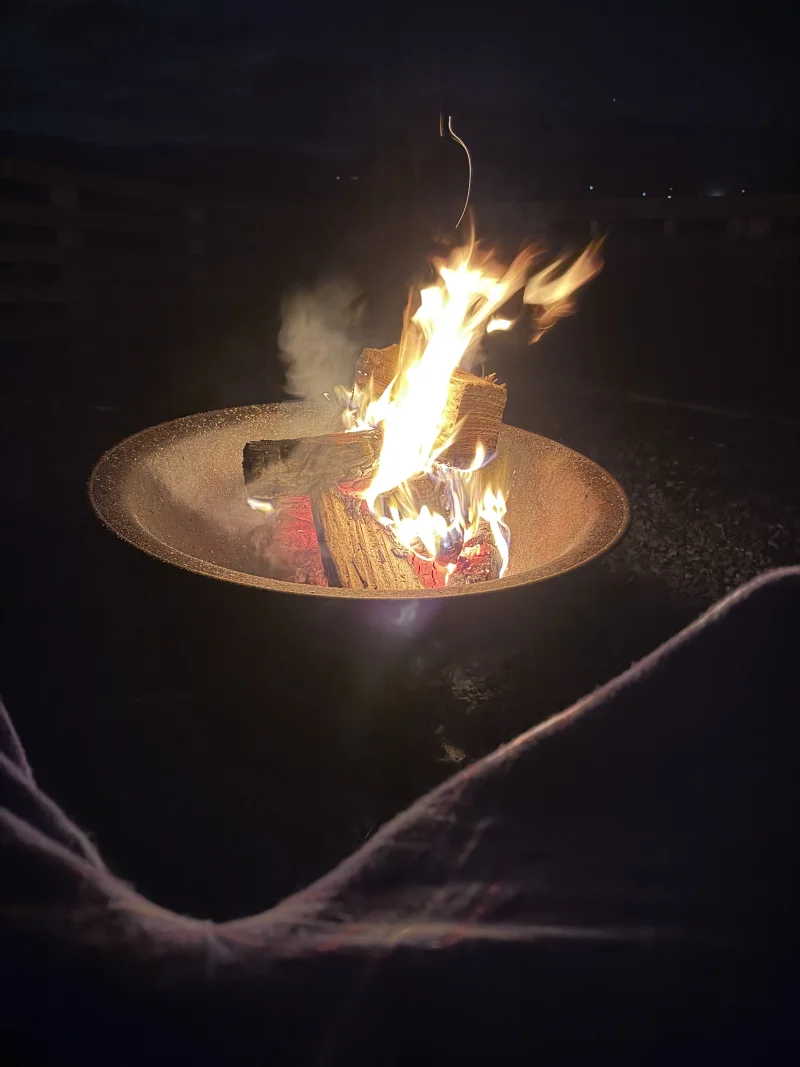
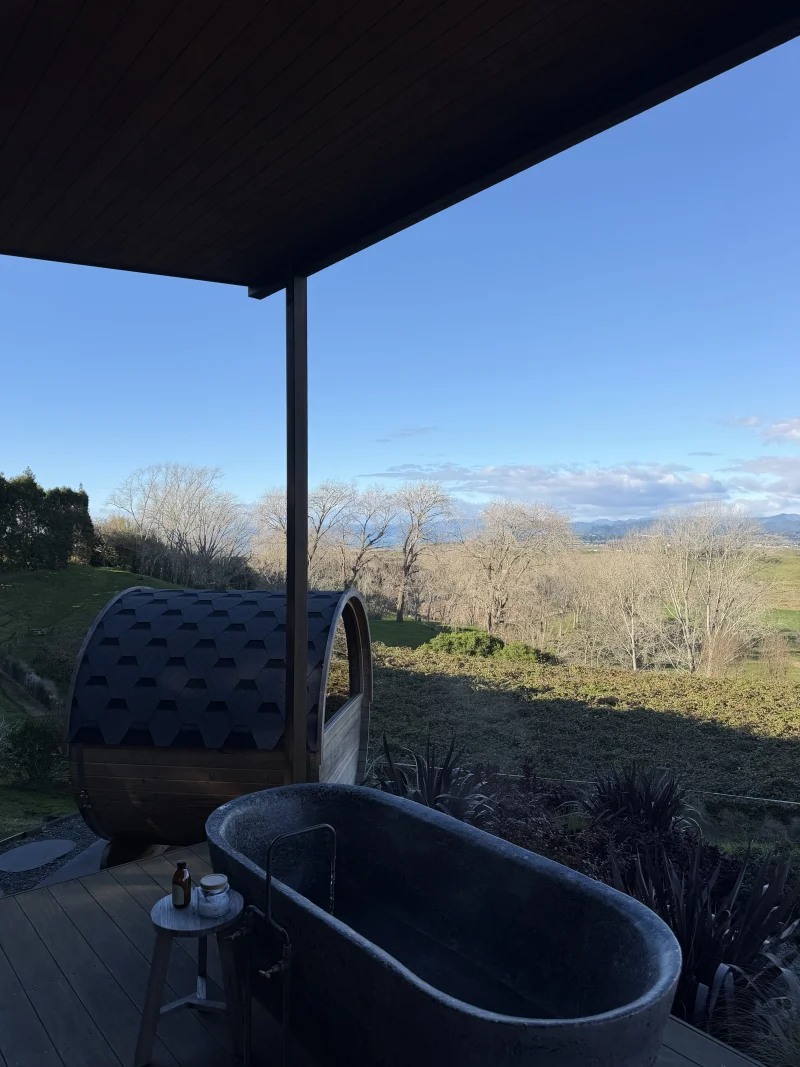
The problem wasn't being alone with my own thoughts. The problem was the drop. I went from all the noise, work and kids and household and everything else, to no noise at all, and the gap between those two states turned out to be too stark to be restful. I didn't want silence. I wanted to be at home with Sarah and the kids, or to have Sarah there with me. Being at the start of the sickness probably didn't help, but I don't think it was only that. I packed up and went home, and I don't regret it. Sarah, for her part, says the episode confirms her long-held position that if she dies first, I need to remarry.
The reading held up. I got through the books I wanted to read, and treating reading as recharge rather than obligation is the part of the plan that actually worked. The guitar stalled out quite badly. Twenty minutes a day sounds like nothing until you're two weeks behind and the habit never formed.
Maybe I'm not built for a hard stop
Here's the pattern I can't ignore. I was sick in 2025 too. Two years running, my body has responded to a hard stop from work by falling over. I'm beginning to think that's not a coincidence, and that the crash is what happens when the adrenaline that carries you through June suddenly has nowhere to go.
But I think there's something deeper in it than adrenaline. I've come to believe that God has wired us for work, and that a month of pure absence of work was never going to feel like rest, because work itself isn't the thing I need rescuing from. There's a Desiring God article that puts it well:
In Genesis 2:15, “The Lord God took the man and put him in the garden of Eden to work it and keep it.” This was prior to the fall, before the entrance of human sin, and shows us that in a perfect world, man would still work. Work is a gift from God, not a curse. Yet our attitude toward work can be a product of the fall. Sin has stained how we view work.
Work existed before anything went wrong. We work because our Creator works and we're made in his image. That reframes what a sabbatical is for. It's not an escape from work, because work isn't the curse. It's a rest from my particular work so I can return to it seeing it as a gift again, rather than as the thing that's slowly grinding me down by December.
The one night away taught me something similar about rest itself. I'd assumed rest meant subtraction, from work and from noise and from people, and the more you subtract the more rested you get. It doesn't work like that, at least not for me. A gentler slope down might be restful. A cliff edge into total silence is just another kind of shock.
In closing
Three sabbaticals in, the scorecard reads: one consumed by an emigration, one that drifted past unplanned apart from a very good week in Colorado, and one interrupted by illness but with a plan that half worked. That sounds like failure written down, but I don't think it is. Each July has taught me something the previous one couldn't.
Next year I'll plan again, because the planless year was the worst of the three. But I'll plan for a gentler slope into it rather than a hard stop, I'll keep the reading, I'll restart the guitar, and I won't book solo nights away. The rest I'm after isn't the absence of work. It's remembering why the work was given to me in the first place.